OUR STANDARD
Every ingredient.
A reason to be here.
01–04 · FORMULATION
What earns a place in the jar
A considered formula begins with a documented purpose, a suitable amount and a review of how it will be used.
An amount with a clear rationale
We consider the ingredient’s form, amount and relevant human research. When a rationale depends on a biological mechanism, we also examine whether the amount can reasonably support that explanation in people. The written rationale makes the choice traceable.
Review for the intended use
Safety review considers the ingredient, amount, intended user and pattern of use, including relevant interactions and restrictions. Daily skin-care and evening formulas have their own requirements. Complete directions and warnings must be available before sale.
A dose we can print — with its reason written down
Every active has a separately disclosed amount and a written reason for its place in the formula. We distinguish a study’s dose from a formula’s amount and identify relevant differences in preparation or material. Working specifications remain visible while the final label is completed.
Research with its source context
Study design, funding and author affiliations help put findings in context. We include them with the source links. For example, the glycine studies include researchers affiliated with an amino-acid manufacturer; that context accompanies the reported sleep and next-day findings.
05–06 · COMMUNICATION
What the evidence lets us say
A finding only means what its study design, participants and measured outcomes can support.
A finding tied to the outcome studied
For supplementation outcomes, we look at relevant human studies: skin hydration and elasticity for collagen research, or sleep and next-day measures for glycine research. We distinguish primary and secondary outcomes, reported findings and established nutritional roles. A secondary or exploratory result must not obscure a null primary outcome. A mechanism alone does not establish a benefit from a finished powder.
The participants and preparation matter
We identify who took part, what they received and how long they used it. Results from a particular clinical population or preparation need that context; they do not automatically transfer to every customer or formula. A short study does not establish a lasting benefit. A finished-product claim requires evidence for the finished product.
INSIDE THE FORMULA
A clear reason. Research you can read.
An ingredient’s role and the evidence for a particular outcome are different questions. We explain both, without turning a research assessment into an ingredient-quality score.
Why it’s included
The ingredient’s place in the formula, with its amount and form. A formulation rationale is not proof that a combination delivers a benefit.
What researchers found
The outcome studied, the people involved and the results—including mixed findings. Ingredient studies are not trials of a finished Dayspan formula.
What to know
Study size, funding, material or dose differences, and meaningful limitations stay alongside the finding, with a link to the source.
PRODUCT READINESS
Three stages. Three different permissions.
The rules above govern single ingredients. This ladder decides what we may say about the finished formula itself. Publishing ingredient research does not move a product into the claim-ready stage.
| Product stage | Question at this stage | What the stage permits |
|---|---|---|
| Prototype candidate | Is this worth formulating and testing? | Ingredient and formulation research, sampling and preparation work. Any published description identifies it as a research direction rather than an available launch product. |
| Launch candidate | Is the formula ready for its final launch requirements? | Published ingredient amounts and attributed research findings, with final label and batch requirements tracked separately. Ingredient evidence is distinct from a trial of the finished formula. |
| Claim-ready formula | Can we say the finished product produces a specific benefit? | Explicit product claims like “improves X” — and only after a well-designed study of the commercial formula itself, in the intended population, at the intended dose, with a pre-specified endpoint. |
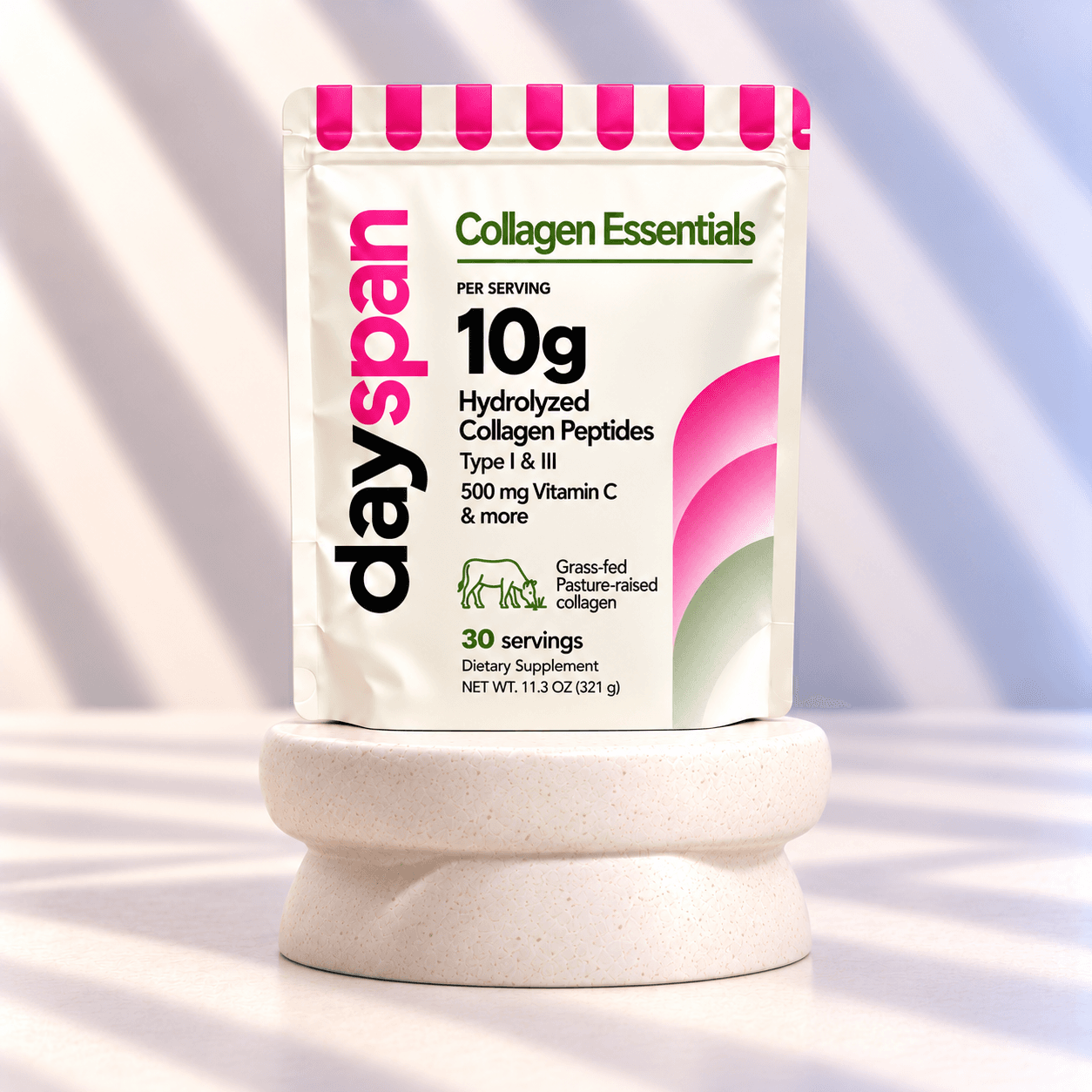
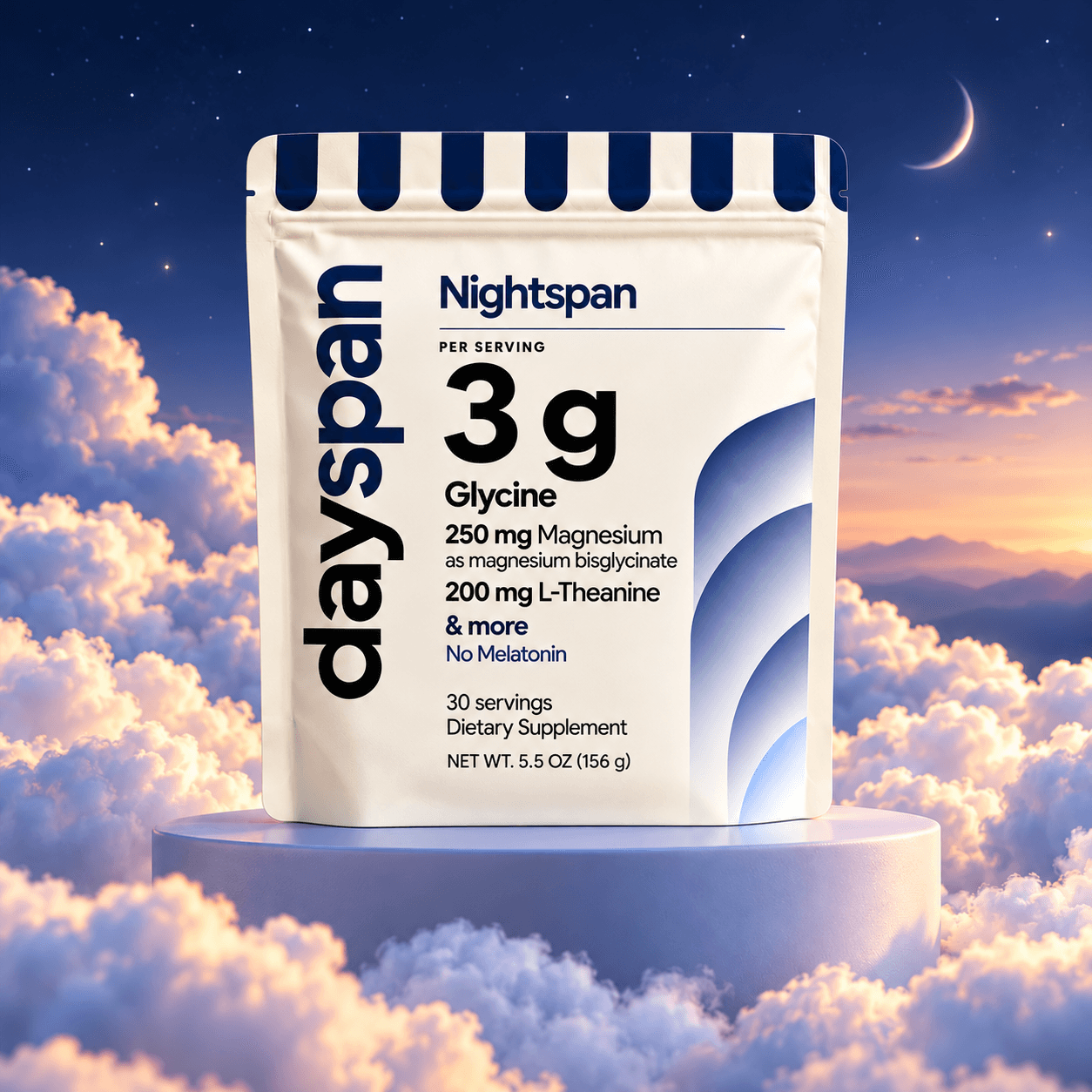
Collagen Essentials and Nightspan today: launch candidates with published active amounts and ingredient research. Final labels and first-batch reports are required before sale.
CLEAR RESEARCH LANGUAGE
The finding, with the context that gives it meaning.
Ingredient research
Sleep findings, precisely described
Biology and measured outcomes
A supplement’s role
Actual availability and customer experience
TAKE THE STANDARD WITH YOU
Read the label with better questions.
Six questions to help you find the amounts, research and context behind a supplement—including ours. This is a reading checklist, not a product-quality or safety score.
01Does the panel print the exact amount of every active ingredient?
Look for an individual amount beside each active, rather than only a total blend weight.
02Can you find the research behind the stated benefits?
Look for named sources and the specific outcomes studied. An ingredient’s role in a formula is different from evidence of a benefit.
03Does the research describe who took part?
Age, health status and other participant characteristics matter when interpreting a result.
04Can you compare the ingredient form and amount with the study?
A familiar ingredient name alone does not establish that the material or serving matches the research.
05Is the trial's funding disclosed anywhere you can find?
Funding and author affiliations are useful context; they do not automatically invalidate a result.
06Are important limitations and safety information easy to find?
Look for mixed findings, warnings and allergens. This checklist cannot establish that a product is safe or suitable for you.
0 of 6 answered.
This checklist does not score ingredients or brands. Your answers stay on this page and are not saved or sent.
READ THE AMOUNT IN CONTEXT
How to read collagen and glycine supplement labels
Start with serving size, then compare the named ingredient, its amount and its form. Scoop weight, blend weight and an individual ingredient amount answer different questions.
| Find this | What the label tells you |
|---|---|
| Serving size | Check the quantity that the listed amounts describe. One scoop on one product need not match one scoop on another. |
| Ingredient and form | Read the full entry: collagen peptides, free glycine and magnesium glycinate are different materials. |
| Individual amount or blend total | A proprietary blend total does not reveal each ingredient’s amount. An omitted individual amount is unknown, not zero. |
| Daily Value | Where established, %DV is a nutritional reference. It is not an effectiveness score; ‘Daily Value not established’ is not a zero amount. |
FDA: reading Supplement Facts.
Convert the unit, then check the ingredient.
3 g equals 3,000 mg. That conversion does not make 3 g of collagen equal to 3 g of free glycine. For an illustrative powder with a 20 g serving and 10 g declared collagen, the collagen amount is 10 g; the whole serving is 20 g.
These are arithmetic examples, not Dayspan serving specifications or directions for use.
Read mineral amounts as elemental amounts.
An example Supplement Facts entry of “Magnesium (as magnesium glycinate) — 250 mg” describes elemental magnesium. It is not the weight of the entire compound or a separate free-glycine amount. Do not add elemental-mineral amounts to other actives to calculate total powder weight.
Read the other ingredients, directions, warnings and allergen information too. Compare the actual material and amount with the study behind a claim; a clear label alone does not establish effectiveness or personal suitability.
- FDA: reading Supplement Facts.
- FDA: ingredient labeling.
- NIH Office of Dietary Supplements: elemental magnesium.
- NIH Office of Dietary Supplements: what supplement labels tell you.
Dayspan’s Collagen Essentials and Nightspan ingredient records remain working specifications. Final labels and serving details are tracked in launch status.
Continue with collagen vs free glycine or glycine vs magnesium glycinate.
READ THE TESTING RECORD
How to read a collagen batch report.
A collagen batch report should help you connect a tested sample to a product and understand the tests performed. Start with the scope, then read the results.
| Find this | What to check |
|---|---|
| Product and lot | Find the product name and lot or batch reference. Ask how the report maps to your package if that link is unclear. |
| Material tested | Check whether the sample was raw collagen or a finished powder. A component report covers that component. |
| Tests covered | Look for named identity, amount or contaminant tests. Read only the results actually reported; a missing test is not a passing result. |
| Results and criteria | Read each result beside its units, method and acceptance specification. A ‘pass’ needs its stated criterion. |
| Report identity | Find the laboratory, report identifier and dates so you can ask about the exact document. |
These are questions for reading a report. FDA’s component certificate-of-analysis (COA) guidance addresses manufacturing controls; it is not a requirement to publish every consumer report or print a lot number on every package. Read FDA’s supplement manufacturing guide.
‘Not detected’ does not mean zero.
For a chemical measurement, “not detected” generally means below the method’s detection limit. Check how the laboratory defines ND and its limit. A detection limit describes the measurement; an acceptance specification describes the criterion used to judge the result. “Below quantitation” and “not detected” are different statements.
FDA analytical terminology, section 3.2 (PDF)Batch testing and clinical research answer different questions.
A batch report describes testing of a sample. It does not establish whether the finished powder improves skin or sleep. NIH notes that quality-testing seals do not guarantee a supplement’s safety or effectiveness.
NIH Office of Dietary Supplements: quality-testing guidanceDayspan’s first-batch reports are still pending. Check the separate launch records for Collagen Essentials and Nightspan. Published ingredient research does not replace either product’s batch report.
FOLLOW THE DECISIONS
See how the formulas took shape.
The work ledger records how ingredient choices developed. The ingredient pages explain the current formulas, and launch status tracks the labels and testing records required before sale.
Explore the work ledger →MAKE IT PART OF YOUR DAY
Your next good ritual.
Meet the full formula, find your moment and make it yours.